A name that sounds lovely in the living room has to work in a lot of other rooms: a classroom, a doctor’s office, a phone call with a bad connection, a job interview, a wedding toast. You cannot test all of them, but you can test most of them in an evening, and you should do it before the name is on a form.
Run each of your finalists, ideally three to five of them, through the eight tests below. Keep brief notes. A name does not need to pass everything, but you should know where it is weak.
1. Say it aloud, three ways
Say the name in a neutral voice, as if answering a question. Then call it from another room, the way you will call a child in from the yard. Then introduce it to a stranger. One guide to testing baby names suggests the same set: everyday speech, distance and a formal introduction. Pay attention to whether syllables get lost when you call it from far away and whether you feel silly saying it to someone new.
2. Say it with the surname
Say the full name three times. Listen for repeated sounds, a clash where the first name ends and the surname begins, or accidental wordplay. A first name that ends in the sound the surname starts with will blur. A very long first name before a very long surname will feel like a mouthful. If a middle name is in play, test it too. Our guide to choosing a middle name explains the rhythm and the join.
3. Write it down
Write the initials of the first, middle and last name, and read them as a word. Lamaze advises checking whether they spell something that could cause embarrassment. Then write the name the way it will appear in real life: an email address, a signature, a label on a school bag. A name that looks good on a birth announcement can look different in a typeface you did not choose.
4. List the nicknames, wanted and unwanted
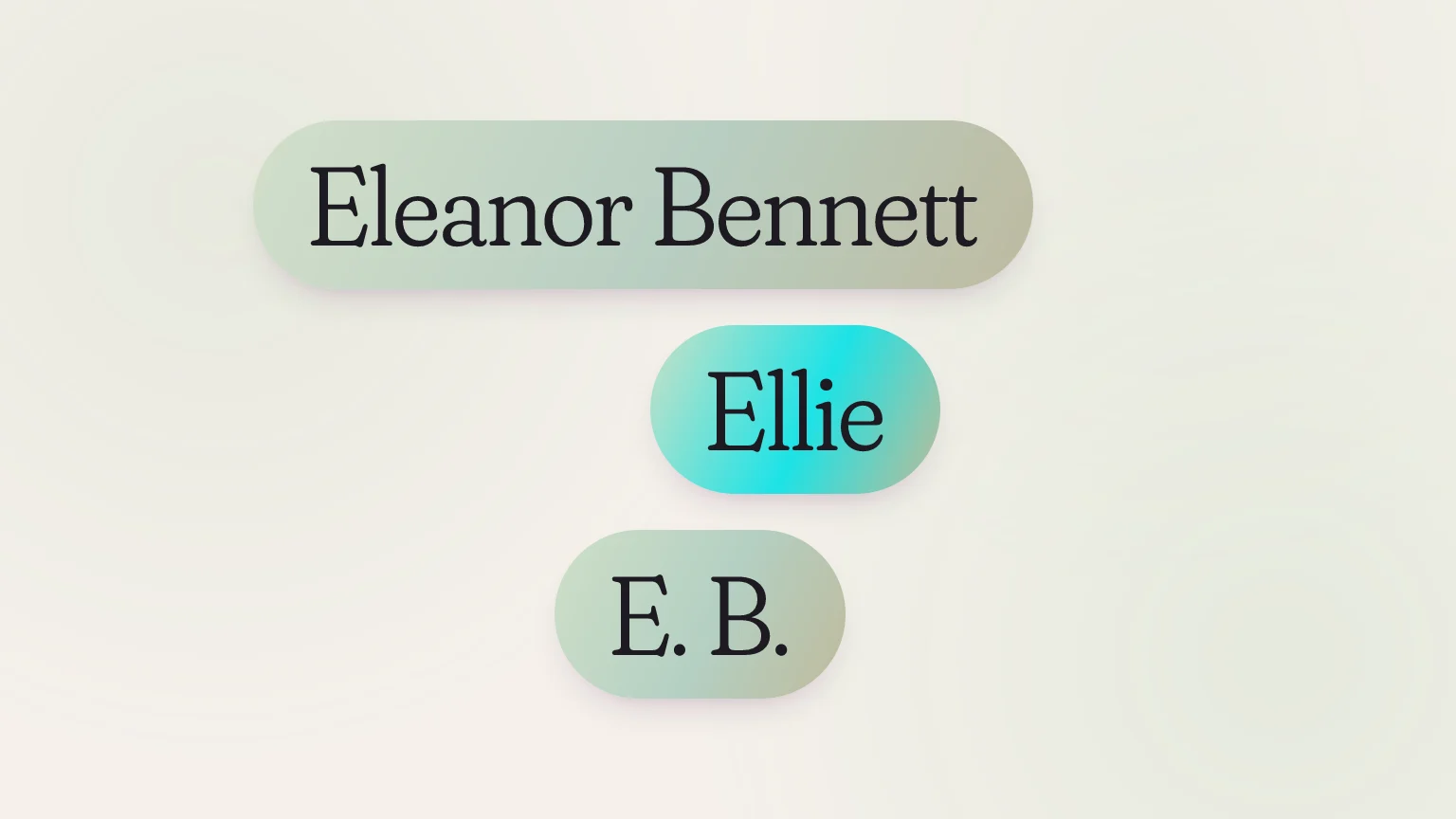
Write down every shortening you can think of, including the ones you dislike. You will not control which one wins. William can become Will, Bill, Billy or Liam. Elizabeth can become Liz, Lizzie, Beth, Betty, Eliza, Libby, Bess or Lisa, and Margaret has seven in Vowel’s data. If you love one path and can live with the rest, keep the name. If an unwanted nickname feels inevitable and bothers you, that is useful to know now.
5. Look up the associations
Search the name together with the words “famous,” “brand” and “meaning.” Names carry baggage that you may not know about until a friend points it out. Vowel’s name pages flag some of it in a “Good to know” note. Anna is a lead character of Disney’s Frozen films, Avery is a major US labels and office-products brand, and Brie is also a French cheese. None of these is a reason to drop a name, and many children never hear about them. You are only checking that you are comfortable.
6. Picture the playground
Ask what a seven-year-old could rhyme it with, twist it into or shorten it to. One of the baby name test guides includes the teasing risk, with rhymes, initials and playground variations. No name is teasing-proof, and the aim is not to eliminate every possibility. The aim is to catch the obvious one now instead of a year from now, and to decide how you would feel if it came up.
7. Picture the CV
Imagine the name typed at the top of a resume, printed on a diploma, read out by a stranger at an interview. Think about a 25-year-old with the name, not a baby. Names are tied to birth years, so check what 25-year-olds are called today. In 2001, the top girls’ names were Emily, Madison, Hannah, Ashley and Alexis, and the top boys’ names were Jacob, Michael, Matthew, Joshua and Christopher. You can browse that year on our 2001 page. A name that was common then will blend in with the 25-year-olds around it, and one that was rare will stand out. Neither is a fault, only something to know.
8. Picture the 80th birthday
A baby named today will, with luck, be 80 in 2106. You cannot know what names will sound like then, but you can see how they age. A woman turning 80 in 2026 was born in 1946, and the top girls’ names that year were Mary, Linda, Patricia, Barbara and Carol, as you can see on the 1946 page. Of the 25 most common girls’ names in 2025, just one, Elizabeth, was also in the 1946 top 25. For boys, five were: James, William, Michael, Daniel and John.
That does not mean today’s names will not age gracefully. A name of the 1940s like Linda now reads as a name from a particular generation, and some other names, like Eleanor, have crossed several generations. The test is to picture a card that reads “Happy 80th” with the name on it, and see whether you still smile. In Vowel, “Try it on for life” takes a name from the hospital bracelet to the 80th birthday card.
After the tests
Mark each name on each test with a plus, a minus or a question mark. A name with several minuses on things you care about is probably out. A name with only question marks may need one more conversation, such as asking a friend how a tricky sound lands for them.
Then do two things:
- Live with it. For a few days, use the name with each other the way you will when the baby arrives. One of the guides we read suggests slipping it into everyday talk with family and watching how people shorten it.
- Sleep on it. Keep your top two or three and stop discussing them. The name you keep coming back to usually tells you something.
If you are stuck between finalists, how to choose a baby name and how to agree on a baby name cover the decision itself. Vowel tries each name with your surname, initials, other spellings and its curve over the years, so many of these checks happen as you browse. If you want a first set of names to test, the style quiz is a good place to start.